Part 1: The Issue
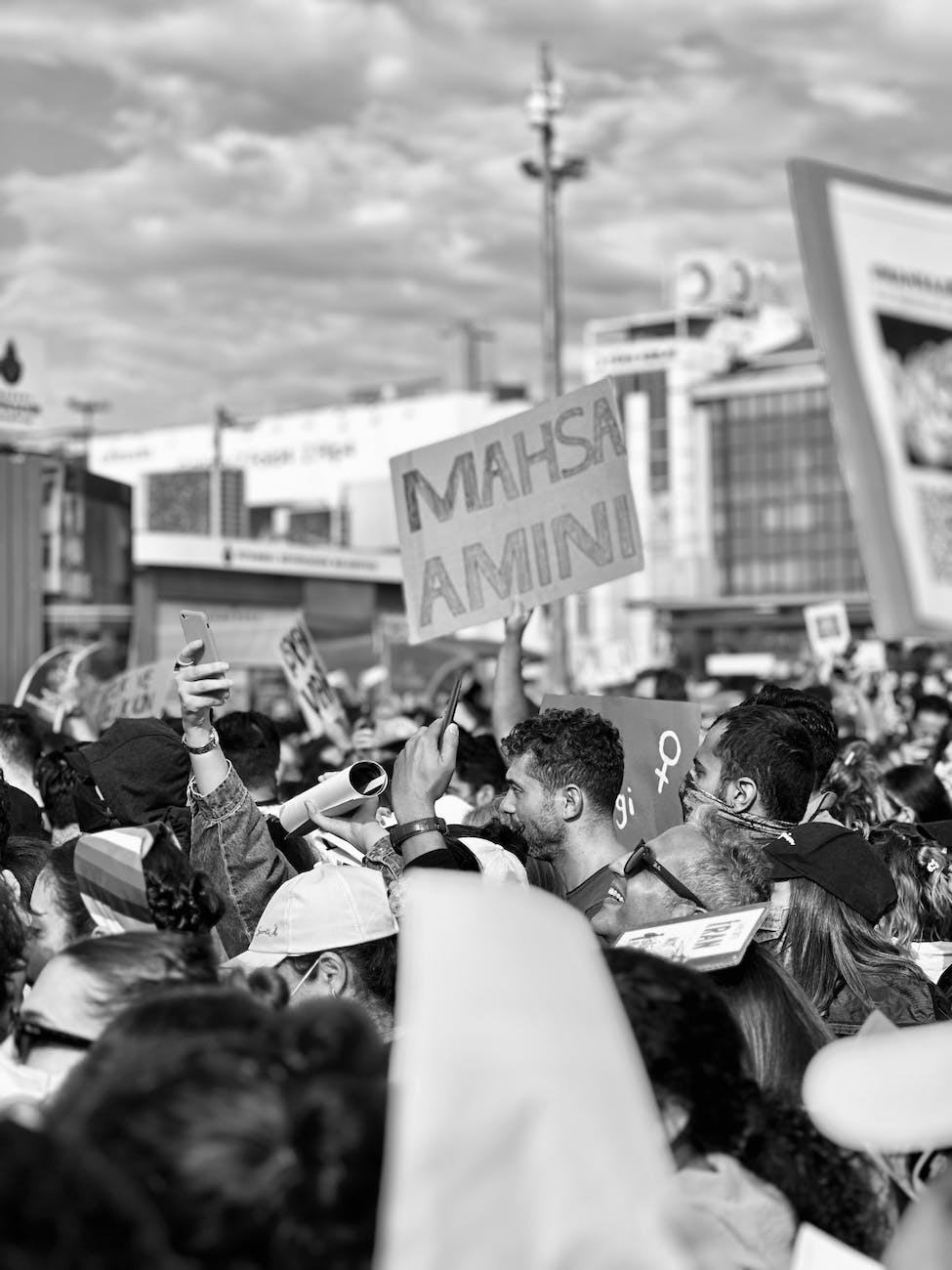
On September 16, 2022, Mahsa Amini, a 22 year old Iranian woman, died from injuries sustained while in the custody of the Morality Police. Mahsa Amini was arrested for failing to follow the country’s rules on hijabs. In Iran, hijabs are mandatory for all women in public places although sometimes the hijabs do not cover all of a woman’s hair. The Morality Police claimed after Amini’s death that she died suddenly of a heart attack while doing mandatory training in custody. However, a video leaked which showed Mahsa Amini, bloody, bruised, and comatose, in a hospital, and this discredited the fabrications of the police.
The unrightful death of Mahsa Amini at the hands of the police has invoked fury across the world, and protests in Iran erupted soon after. Many high-profile Iranian women are speaking out on social media about the injustice such as actress, Taraneh Alidoosti, who held a sign in a picture of her with no hijab on Instagram which read, “Women, Life, Freedom,” in Kurdish. This slogan has become very popular among protestors in Iran. Another celebrity protesting the death of Mahsa Amini is Iranian Olympic climber, Elnaz Rakibi, who competed in South Korea without a hijab. She is the second Iranian athlete to ever compete globally without a hijab. Unfortunately, after she was taken back to Tehran, Rakibi was threatened to make a forced confession about her conduct or she would be fined or imprisoned. Rakibi is currently being held under house arrest by the Iranian government. Many women worry for her safety because of how public her disregard for the hijab requirement became after she received global media attention. Young women everywhere in Iran have been throwing off their hijabs, but unfortunately this is incredibly dangerous for them. One Iranian woman, Elham Afkari, attempted to tell a British reporter about the state of her home country, and had to flee for fear of being detained and punished by the Iranian government. Elham Afkari was arrested as she attempted to flee to Britain, and her sister, Saeed Afkari, told reporters that Elham’s three year old daughter is now missing.
Part 2: History of hijab laws and women’s rights in Iran
Section 1: Hijab Mandates
In 1936, the Monarch, Rezah Shah, mandated a removal of all hijabs in an attempt to unveil women. Shah was greatly influenced by modernity in other parts of the world. However, between 1941 and 1979, there was no legislation dictating what women must wear, but many women wore hijabs by choice or because their families forced them. The Islamic Republic of Iran introduced a hijab law in 1979, and protests against this mandate immediately erupted. Women marched in the streets with slogans eerily similar to today’s slogans. In 1979, they commonly chanted, “freedom of choice in clothes”, and today they chant or hold signs with: “Women, Life, Freedom” or “Jin, jiyan, azadi”.
The Morality Police was an institution created in the 1990s after the Iran-Iraq War. However, women have been protesting this for many years in subtle ways. Some Iranian women wear their hijabs loosely showing parts of their hair. In 2017, a woman named Masih Alinejad created a movement to speak out against the morality police. Women would not wear hijabs and wear white on “White Wednesdays”, but Alinejad was expelled from the country for her actions.
Part 3: Consequences and Political Significance
Ebrahim Raisi won the 2017 Iranian Presidential election. Raisi has supported increasing strictness on women’s modesty and other restrictions on their rights. Although the Islamic Republic of Iran has multiple Constitutional Provisions protecting gender equality and ensuring women’s rights, women have been fighting for centuries in Iran for respect and equality. Women do have suffrage in Iran, but they are not allowed to run for President.
President Ebrahim Raisi reacted to the death of Mahsa Amini on September 28, 2022, saying that the country was “saddened”, but that he would not accept chaos and protests as a result, and he spoke in support of the police trying to control the protests since Amini’s death.
Part 4: Analysis
These protests against Iranian government may seem abrupt, but unrest among women in the community has been growing for years after multiple instances of police violence and the continued failure of the government to protect Iranian women. Social media deserves some credit for the widespread awareness of Mahsa Amini’s death. Iran attempted to cover up the morality police’s wrongdoings, but the truth went viral. Hopefully, the civil unrest will induce change in Iran, but unfortunately President Ebrahim Raisi is not an activist, and those in power will fight to retain control and end the protests. Activists are being arrested, and their families fear for their wellbeing.
Works Cited:
Taub, Amanda. “Unveiled and Rising up: How Protests in Iran Cut to the Heart of National Identity.” The New York Times, The New York Times, 5 Oct. 2022, https://www.nytimes.com/2022/10/05/world/middleeast/iran-protests-women-hijab.html?searchResultPosition=3.
Disclaimer*:
I wrote this in October, 2022 for a school paper so events are not up to date with the current Iranian political situation. For example, Iran has claimed to have disbanded the morality police because of international and domestic pressures.
The assignment was to write about a singular academic article.
 Allie's Thoughts on Policy
Leave a comment