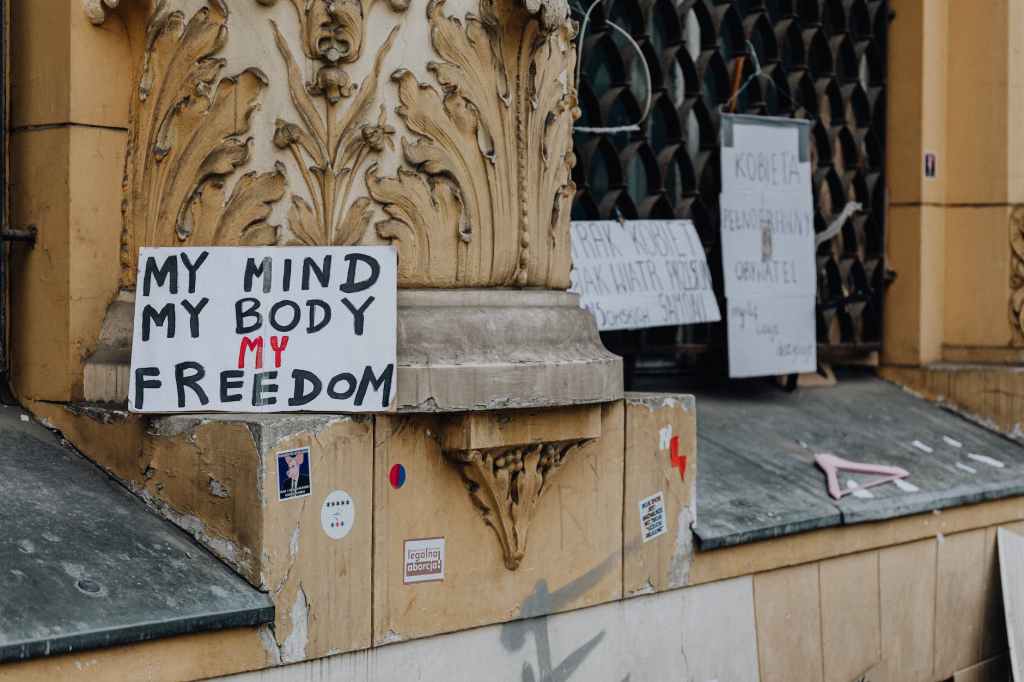
Criminalizing abortion does not decrease the number of abortions in a country, and it has already made abortions unsafe. After the US Supreme Court overturned Roe v Wade (1973), the right to abortion is no longer protected federally, and states must decide whether or not to make termination of a pregnancy legal. The states should legalize abortion because it is a Constitutional right, and it protects the well being of women throughout the country.
The right to an abortion is an essential right guaranteed by the ConstitutionThe right to abortion is classified as included in the right to privacy which is protected by and interpreted from the 1st, 4th, 5th, 9th, and 14th amendments. The right to privacy can be defined as “the right against undue government intrusion into fundamental personal issues and decisions” (NOLO) which also protects same-sex marriage (Obergefell v Hodges, 2015), use of contraception by a married couple (Griswold v Connecticut, 1965), and interracial marriage (Loving vs Virginia, 1967). The basic Constitutional argument for the right to an abortion is that the right to privacy guarantees that the government cannot interfere with private decisions.
The right to privacy has been upheld throughout decades of Supreme Court Rulings and should continue to be upheld. The Supreme Court rarely goes against precedent and should only rule on the Constitutionality of a law rather than going into partisan politics. Much of the opinion by Justice Alito failed to address the Constitutionality of the right to privacy. Alito does address the issue of precedent and states that it is uncommon, but the precedent established in Roe must be overturned because the constitutionally analysis in Roe was “egregiously wrong” (Alito). The most compelling argument for legal abortion is in the ninth amendment which reserves certain rights for the people; Alito mentions the ninth amendment but never argues against. He focuses instead on the idea of a nonexistent tradition of desire for legal abortion in the US by quoting English common law and English lawyers in the 13th century (e.g. Henry de Bracton), and an early colonial lawyer, Matthew Hale, infamous for popularizing the marital rape exemption and extreme qualifications for classifying an assault as rape legally. Because of the lacking Constitutional basis and multiple hasty generalizations for the opinion, the Supreme Court should overrule Dobbs v Jackson.
The right to an abortion should also be upheld federally because of the proven effects that criminalization has on the health of women. Countries where termination has already been criminalized work well as case studies for the effect of criminalizing abortion on the actual rates of abortion. For example, abortion is illegal in the Philippines and El Salvador, but termination rates are still very high in both countries. These abortions are incredibly dangerous with women using methods such as rat poison or knitting needles in an attempt to terminate pregnancy. As a result, mortality rates from abortion are also very high; 1,000 Filipino women died from unsafe abortions in 2008. Washington University recently used quantitative evidence in a study which showed that sexually active teens had an abortion rate of 18%. Easy access to IUDs reduces abortion rates in young women, and this demonstrates how actions other than criminalization are more effective. Legal abortion would help prevent dangerous abortions.
The right to an abortion should be upheld on account of Constitutionality and to protect the welfare of women in the US. Although it is unlikely that the Supreme Court will revisit Dobbs in the near future, state legislatures are able to make laws to protect abortion rights.
Works Cited
Belluck, Pam. “A Study Bolsters a Call to Use Long-Acting Contraceptives.” The New York Times, The New York Times, 1 Oct. 2014, https://www.nytimes.com/2014/10/02/science/teenage-pregnancy-and-abortion-rates-plummet-with-long-acting-female-contraception-study-says.html.
Facts on Abortion in the Philippines: Criminalization and a General Ban …https://reproductiverights.org/sites/crr.civicactions.net/files/documents/pub_fac_philippines_1%2010.pdf.
Home – Supreme Court of the United States. https://www.supremecourt.gov/opinions/21pdf/19-1392_6j37.pdf.
“Right to Privacy Definition.” Www.nolo.com, https://www.nolo.com/dictionary/right-to-privacy-term.html.
“Oyez.” Obergefell v Hodges, https://www.oyez.org/cases/2014/14-556.
 Allie's Thoughts on Policy
Leave a comment